
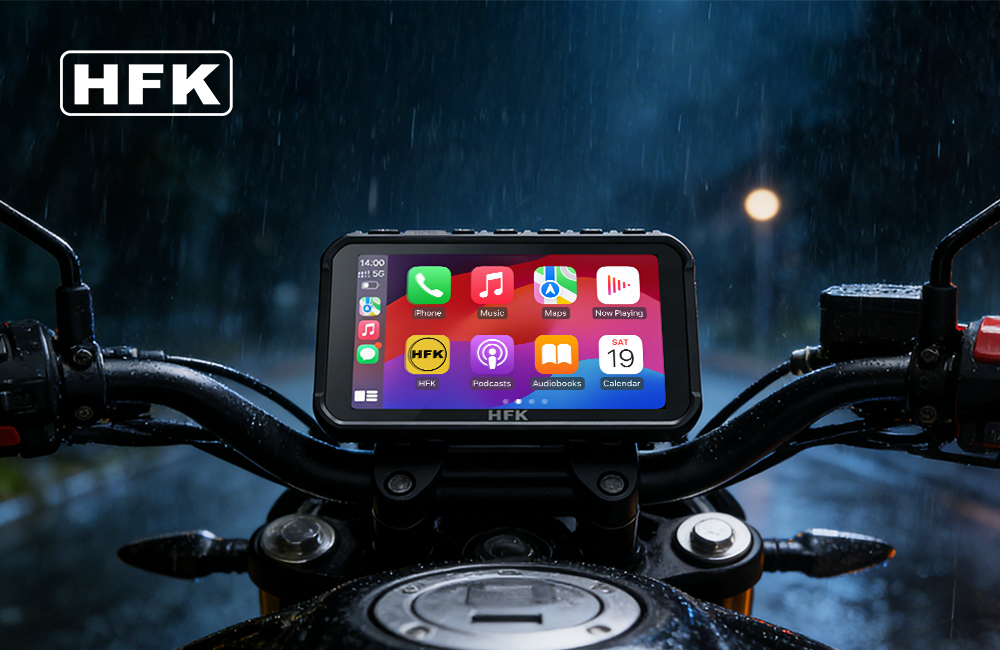

Long-distance motorcycle touring demands more than just endurance from the rider — it demands reliability from every piece of equipment on the bike.
From sudden rainstorms to high-speed highways, from scorching heat to cold mountain air, the riding environment constantly changes. In these conditions, a motorcycle CarPlay system is not just a convenience feature — it becomes a critical tool for navigation, safety, and control.
But here’s the challenge:
Most CarPlay systems look similar on the surface.
The real differences are hidden in technical specifications and structural design.
If you want to choose the right system for long-distance touring, you need to understand what actually matters.
1. The Reality of Long-Distance Riding
During extended rides, your CarPlay system must handle:
- Continuous vibration for hours
- Direct sunlight exposure
- Heavy rain and dust
- High-speed wind pressure
- Rapid temperature changes
This means one thing:
Only systems designed for durability can survive long-distance touring.
2. Key Technical Specifications That Define a Touring-Ready CarPlay
Below is a clear comparison of different types of motorcycle CarPlay systems based on critical technical parameters.
📊 Technical Comparison Table (Touring Use Case)
| Specification | Basic CarPlay Units | Mid-Range Motorcycle Units | Long-Distance Touring Grade |
|---|---|---|---|
| IP Rating (Water/Dust Protection) | IP54–IP65 | IP65–IP67 | IP67–IP69 |
| Display Brightness | 500–700 nits | 800–1000 nits | 1000–1500+ nits |
| Operating Temperature | -10°C to 50°C | -20°C to 60°C | -30°C to 70°C+ |
| Vibration Resistance | Basic internal mounting | Reinforced structure | Anti-vibration architecture + secured connectors |
| Housing Material | Standard ABS plastic | Thickened ABS | Reinforced composite / UV-resistant materials |
| Screen Visibility | Indoor-optimized | Improved outdoor | Full outdoor high-bright + anti-glare |
| Connector Protection | Exposed ports | Rubber covers | Fully sealed waterproof harness |
| Durability Over Time | Short-term use | Moderate | Long-term extreme touring reliability |
3. Why These Specifications Matter
3.1 IP Rating: Protection Against the Elements
On long trips, rain is not optional — it is inevitable.
A higher IP rating ensures:
- Resistance to heavy rain and water spray
- Protection from dust and debris
- Long-term prevention of internal corrosion
For serious touring, IP67 or above is essential.
3.2 Display Brightness: Visibility Equals Safety
Navigation must be readable instantly.
Low-brightness screens become difficult to see under direct sunlight, forcing riders to look longer and increasing risk.
High-end touring systems provide:
- 1000+ nits brightness
- Anti-glare coating
- Clear visibility in all lighting conditions
This improves reaction time and overall riding safety.
3.3 Vibration Resistance: The Silent Failure Factor
Motorcycle vibration is continuous and unavoidable.
Over time, weak internal structures can lead to:
- Loose connections
- Screen instability
- Internal damage
Touring-grade systems are built with:
- Reinforced internal mounting
- Shock-resistant design
- Secure installation systems
This ensures stable performance over thousands of kilometers.
3.4 Temperature Range: Stability Across Environments
Long-distance riders often experience multiple climates in one trip.
A reliable system must handle:
- Extreme heat during daytime riding
- Cold air at high altitude
- Rapid environmental changes
A wider operating temperature range ensures:
- Consistent performance
- No overheating shutdown
- Stable wireless connectivity
4. Safety Advantages in Long-Distance Touring
A properly engineered CarPlay system enhances safety by:
- Keeping navigation at eye level
- Reducing the need to interact with a smartphone
- Supporting hands-free voice control
- Minimizing distraction
Compared to phone mounts, a dedicated CarPlay system provides a more stable and reliable interface.
5. Handling Unexpected Situations
During long-distance touring, riders often face:
- Sudden detours
- Navigation errors
- Poor road signage
- Traffic changes
A high-performance CarPlay system ensures:
- Fast route recalculation
- Clear guidance
- Continuous navigation visibility
This reduces stress and improves decision-making.
6. Durability: The Most Important Investment
Short-term functionality is easy to achieve.
Long-term durability is what matters.
A touring-ready motorcycle CarPlay system must:
- Withstand extended riding hours
- Resist environmental damage
- Maintain stable performance over time
Choosing a durable system reduces the risk of failure when you need it most.
Conclusion
The best motorcycle CarPlay system for long-distance touring is not defined by appearance or price.
It is defined by engineering specifications and real-world performance.
A true touring-grade system must provide:
- High-level waterproof and dust protection
- Strong vibration resistance
- High-brightness outdoor visibility
- Wide temperature tolerance
- Long-term durability
Because on long journeys, conditions are unpredictable — but your equipment shouldn’t be.
Choose a system built for endurance, not just features.
That’s what makes the difference between a smooth journey and an interrupted one.
分享:
What Are the Requirements for CarPlay in ADV Motorcycle Touring? A Technical Breakdown with Real Specifications
How to Protect Yourself in a Traffic Accident During Long-Distance Motorcycle Touring