
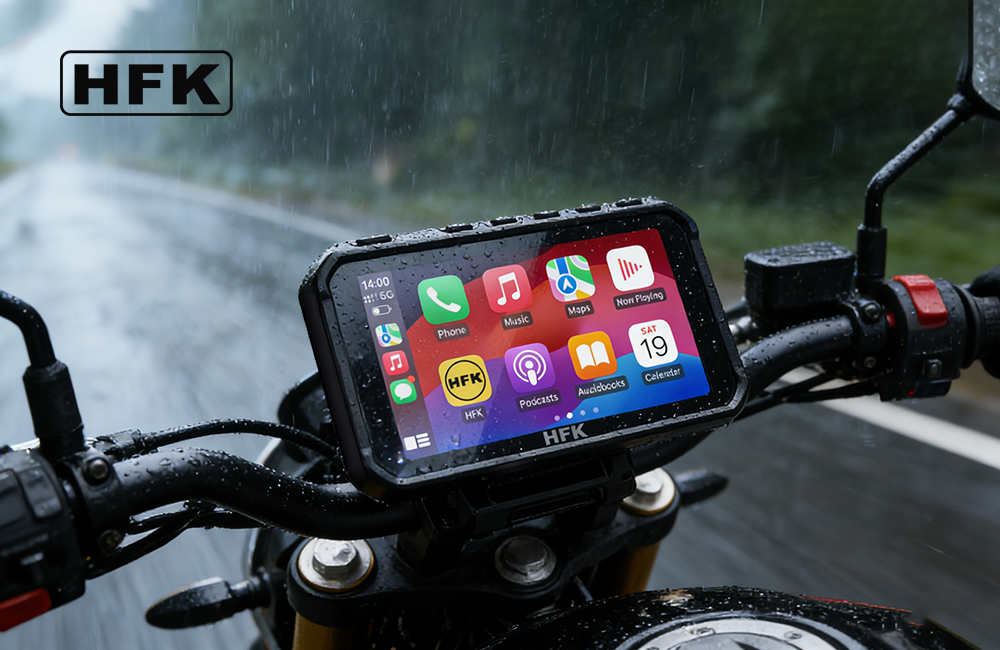

The motorcycle accessory market has changed dramatically over the past few years.
What was once a niche product has now become an essential upgrade for riders around the world. Whether you're commuting every day, exploring mountain roads on weekends, or embarking on cross-country adventures, a motorcycle CarPlay display has become one of the most practical additions to any bike.
Today, the market is filled with brands offering motorcycle CarPlay systems at prices ranging from under $100 to more than $600.
At first glance, many of these products look almost identical.
They all promise:
- Wireless Apple CarPlay
- Android Auto
- GPS navigation
- Bluetooth connectivity
- Waterproof protection
So why is there such a huge difference in price?
And more importantly…
How do you know which one is actually worth buying?
The answer isn't found in the spec sheet alone.
Let's look at the factors that truly matter.
1. Price Isn't Everything
The first mistake many riders make is buying solely based on price.
Budget models may cost between $80–150, while premium systems often range from $300–600.
Lower-priced products usually include basic functions such as:
- Wireless CarPlay
- Android Auto
- Simple touch display
For occasional weekend rides, they may be perfectly adequate.
However, long-distance riders quickly notice the compromises:
- Slower response times
- Lower screen brightness
- Less stable wireless connections
- Basic mounting systems
- Lower durability
A premium motorcycle display is not expensive simply because of the logo—it often reflects higher-quality hardware, engineering, and long-term reliability.
2. Display Quality Is More Important Than Screen Size
Many riders focus on display size:
"Should I buy a 5-inch or 7-inch screen?"
In reality, display quality matters far more than size.
A larger screen is of little use if it cannot be read under bright sunlight.
When comparing displays, consider:
- Brightness (measured in nits)
- Color accuracy
- Anti-glare coating
- Viewing angles
- Touch sensitivity with riding gloves
For riders who travel during the day, a high-brightness display (around 1200–1400 nits) offers a significant advantage over lower-brightness screens, making navigation much easier to read in direct sunlight.
3. Waterproof Rating Isn't the Whole Story
Many products advertise an IP67 or IP68 waterproof rating.
While this indicates protection against water and dust, it doesn't tell the whole story.
Long-distance touring exposes a motorcycle display to:
- Heavy rain
- High-pressure water during cleaning
- Mud
- Road salt
- Dust
- Rapid temperature changes
The quality of sealing, connectors, and housing materials is just as important as the official IP rating.
A well-engineered unit should continue performing reliably after years of outdoor use—not just survive a laboratory test.
4. Build Quality Makes a Huge Difference
One of the biggest differences between premium and entry-level motorcycle CarPlay systems lies in their construction.
Budget models often use lightweight plastic housings and standard internal components.
Premium systems typically feature:
- Reinforced aluminum alloy construction
- Stronger internal structural support
- Better heat dissipation
- Improved resistance to vibration
This is particularly important for adventure motorcycles and touring bikes, where continuous vibration and harsh road conditions place greater stress on electronic devices.
A rugged design helps ensure long-term reliability on every ride.
5. Screen Brightness Can Affect Safety
Imagine riding through the desert at noon or crossing an open highway on a bright summer day.
If you can't clearly see your navigation screen, you'll naturally spend more time looking at it.
That extra second of distraction can increase risk.
A high-brightness display combined with anti-glare technology allows riders to read directions quickly while keeping their attention on the road.
This isn't just about convenience—it directly contributes to safer riding.
6. Connectivity and System Stability
Wireless Apple CarPlay and Android Auto are now standard features, but not every system delivers the same experience.
Some lower-cost products may experience:
- Slow startup
- Random disconnects
- Laggy touch response
- Delayed navigation updates
For long-distance touring, stability matters more than having extra features.
A dependable system should connect automatically every time you start your motorcycle and maintain a stable connection throughout the ride.
7. Consider the Features You Actually Need
Different riders have different priorities.
Daily Commuters
Look for:
- Quick startup
- Reliable navigation
- Compact size
- Easy operation
Weekend Riders
Useful features include:
- Wireless music streaming
- Phone notifications
- Easy installation
Long-Distance Tourers
Prioritize:
- High-brightness display
- Rugged construction
- Excellent weather resistance
- Stable wireless connectivity
- Compatibility with motorcycle dash cameras
- Glove-friendly touch operation
Buying features you never use only increases cost without improving your riding experience.
8. Compare Before You Buy
The table below summarizes the key differences between typical budget units and premium motorcycle CarPlay systems.
| Feature | Budget Models | Premium Motorcycle CarPlay |
|---|---|---|
| Price | $80–150 | $300–600 |
| Display Brightness | Standard | High-bright (1200–1400 nits) |
| Housing Material | Plastic | Reinforced aluminum alloy |
| Anti-Glare Display | Basic or None | Advanced anti-glare coating |
| Waterproof Design | Basic IP67 | Enhanced sealing & premium weather protection |
| Vibration Resistance | Standard | Reinforced for long-distance riding |
| Wireless Stability | Good | Optimized for consistent performance |
| Touring Durability | Suitable for casual use | Built for demanding long-distance travel |
While specifications vary by manufacturer, the trend is clear: premium models focus on durability, visibility, and long-term reliability rather than simply adding more features.
9. Think Beyond Navigation
A motorcycle CarPlay display is no longer just a navigation device.
It has become the center of a modern riding setup.
Many premium systems integrate seamlessly with:
- Motorcycle dash cameras
- Bluetooth helmet intercoms
- Music apps
- Voice assistants
- Real-time notifications
This creates a safer and more enjoyable riding experience.
Instead of juggling multiple devices, riders have one intuitive interface that keeps essential information within easy view.
10. Choosing the Right Brand
When comparing brands, don't focus only on advertising or the number of features listed on the product page.
Instead, ask yourself these questions:
- Is the display bright enough for direct sunlight?
- Is the housing designed for long-term outdoor use?
- Can it withstand vibration from thousands of miles of riding?
- Is the wireless connection stable every day?
- Will it still perform reliably after years of touring?
The answers to these questions matter far more than an extra app or an additional menu option.
Conclusion
With so many motorcycle CarPlay brands on the market, choosing the right one can feel overwhelming.
The best system isn't necessarily the cheapest—or the one with the longest feature list.
Instead, look for a product that delivers where it matters most:
- A bright, anti-glare display for easy visibility
- Stable wireless Apple CarPlay and Android Auto
- Rugged construction designed for real-world riding
- Reliable performance in rain, heat, dust, and vibration
- A user-friendly interface that minimizes distraction
A quality motorcycle CarPlay is more than an accessory—it's an investment in comfort, confidence, and safety.
Choose a system built for the way you ride, and every journey—whether it's your daily commute or a thousand-mile adventure—will become smoother, smarter, and far more enjoyable.
Share:
วิธีเพิ่มความปลอดภัยและความเพลิดเพลินในการขับขี่รถจักรยานยนต์
Does Your Motorcycle Really Need a Dedicated Dash Cam? Its Role Is Bigger Than You Think