
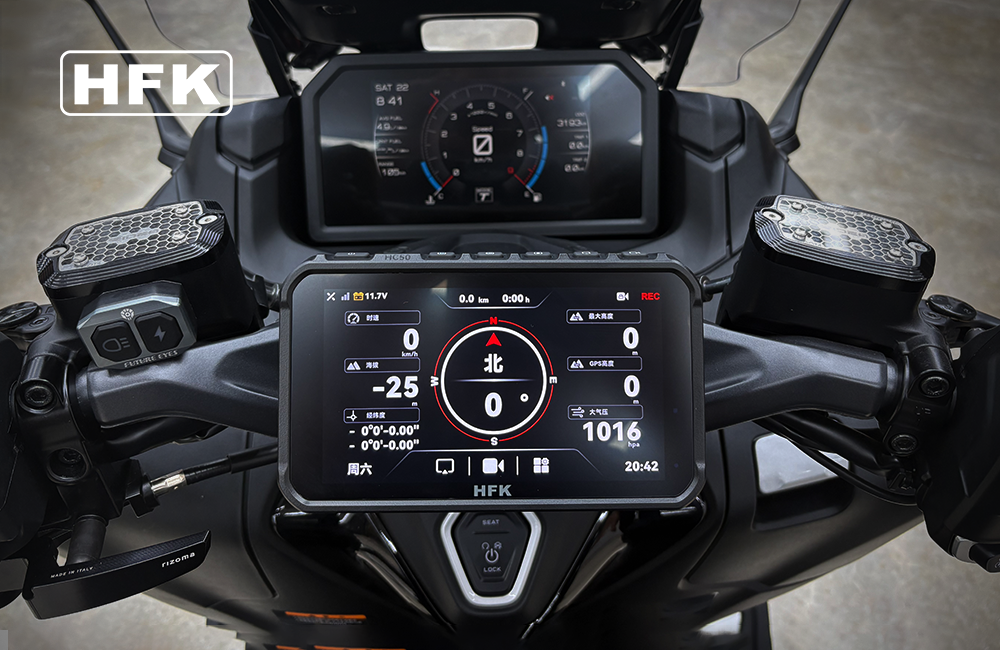

For years, many riders relied on a simple solution for navigation:
mounting a smartphone on the handlebar using a phone holder.
It seems convenient. It seems affordable. And it seems sufficient.
But is it really designed for motorcycle riding?
As riding environments become more demanding — higher speeds, longer touring distances, unpredictable weather — the limitations of phone-based navigation become increasingly obvious. That is why more riders are turning to dedicated motorcycle CarPlay systems.
This article explains why motorcycle navigation should use a purpose-built motorcycle CarPlay instead of a smartphone mounted on a bracket — from both a technical and safety perspective.
1. The Fundamental Difference: Consumer Device vs Purpose-Built Equipment
A smartphone is engineered for handheld daily use.
A motorcycle navigation device must survive:
-
Continuous engine vibration
-
Direct sunlight exposure
-
Rain and humidity
-
Wind pressure at highway speeds
-
Extreme temperature fluctuations
These are two completely different operating environments.
Mounting a phone on a bracket does not transform it into motorcycle-grade equipment.
2. The Problem with Phone Mount Navigation
2.1 Vibration Damage to Smartphone Cameras
Modern smartphones use optical image stabilization (OIS) modules in their cameras. Continuous high-frequency motorcycle vibration can damage these delicate internal components.
Over time, riders may experience:
-
Blurry photos
-
Camera focusing failure
-
Internal stabilization malfunction
Many phone manufacturers do not cover vibration damage under warranty when used on motorcycles.
2.2 Overheating Under Direct Sunlight
When mounted externally, phones are exposed to:
-
Direct UV radiation
-
Screen brightness at maximum level
-
GPS + Bluetooth + mobile data running simultaneously
This combination frequently causes thermal shutdown.
A navigation device that overheats and turns off mid-ride is not reliable.
2.3 Limited Waterproof Protection
Even water-resistant phones are not designed for:
-
High-pressure rain at highway speeds
-
Continuous wet exposure
-
Mud splash during off-road riding
Charging ports remain vulnerable. Once moisture enters, corrosion begins.
2.4 Screen Visibility Issues
Phone screens, even high-end models, often struggle in direct sunlight.
Glare, reflections, and brightness limitations reduce readability — forcing riders to look longer at the screen, increasing risk.
3. How Dedicated Motorcycle CarPlay Solves These Problems
A motorcycle-specific CarPlay system is engineered for outdoor mechanical environments.
Instead of mounting your phone externally, the system:
-
Keeps the phone safely in your pocket
-
Uses wireless CarPlay connection
-
Displays navigation on a rugged outdoor screen
This single design shift dramatically improves durability and safety.
4. Key Advantages of Dedicated Motorcycle CarPlay
4.1 Engineered Vibration Resistance
Professional motorcycle CarPlay units feature:
-
Reinforced PCB mounting
-
Shock-resistant internal structures
-
Secured connector systems
Unlike smartphones, they are built to tolerate continuous vibration cycles.
4.2 High-Brightness Outdoor Displays
Motorcycle CarPlay screens are typically:
-
1000+ nits brightness
-
Anti-glare coated
-
Designed for direct sunlight readability
This ensures clear navigation visibility without excessive eye strain.
4.3 Advanced Waterproof Structure
Most dedicated systems offer high ingress protection ratings (IP67 or higher), meaning:
-
Rainproof
-
Dustproof
-
Sealed connectors
-
Internal moisture protection
This is critical for touring riders who encounter unpredictable weather.
4.4 Thermal Stability
Dedicated units are built with wider operating temperature ranges.
They handle:
-
Summer heat
-
Cold mountain rides
-
Rapid temperature shifts
Smartphones often shut down in similar conditions.
4.5 Safety and Focus
With a dedicated system:
-
Your primary phone remains protected
-
You reduce risk of dropping or losing your device
-
Navigation is always visible and stable
In addition, handlebar-mounted CarPlay systems allow integration with Bluetooth helmets for voice control and call management — reducing manual interaction.
5. Functional Advantages Beyond Navigation
Motorcycle-specific CarPlay systems provide:
-
Real-time map updates
-
Music streaming control
-
Hands-free calls
-
Voice assistant activation
-
Clear large-format navigation UI
The experience is optimized for riding posture and quick-glance visibility.
Phone screens are optimized for touch interaction at close distance — not at 80 km/h in bright sunlight.
6. Long-Term Cost Perspective
While a phone mount appears cheaper initially, consider:
-
Potential smartphone camera damage
-
Overheating-related battery degradation
-
Screen burn-in from constant max brightness
-
Weather-related internal corrosion
Replacing a damaged flagship phone costs significantly more than investing in proper motorcycle-grade equipment.
Conclusion: Designed for Riding vs Adapted for Riding
A smartphone on a bracket is an adaptation.
A dedicated motorcycle CarPlay system is an engineered solution.
When navigating on two wheels, the device must withstand mechanical stress, environmental exposure, and long riding hours.
The difference is not just convenience — it is reliability, safety, and durability.
If you ride occasionally in perfect weather, a phone mount might seem enough.
But if you ride seriously — commute daily, tour long distance, or face changing conditions — a dedicated motorcycle CarPlay system is not a luxury upgrade.
It is the right tool for the environment.
Because on a motorcycle, equipment should be built for the road — not borrowed from your pocket.
Share:
Thinking About Installing a Motorcycle CarPlay but Not Sure How to Choose? A Technical Comparison Guide with Real Specifications
For ADV and Long-Distance Touring Riders, Is a Motorcycle Dash Cam Really Necessary?