
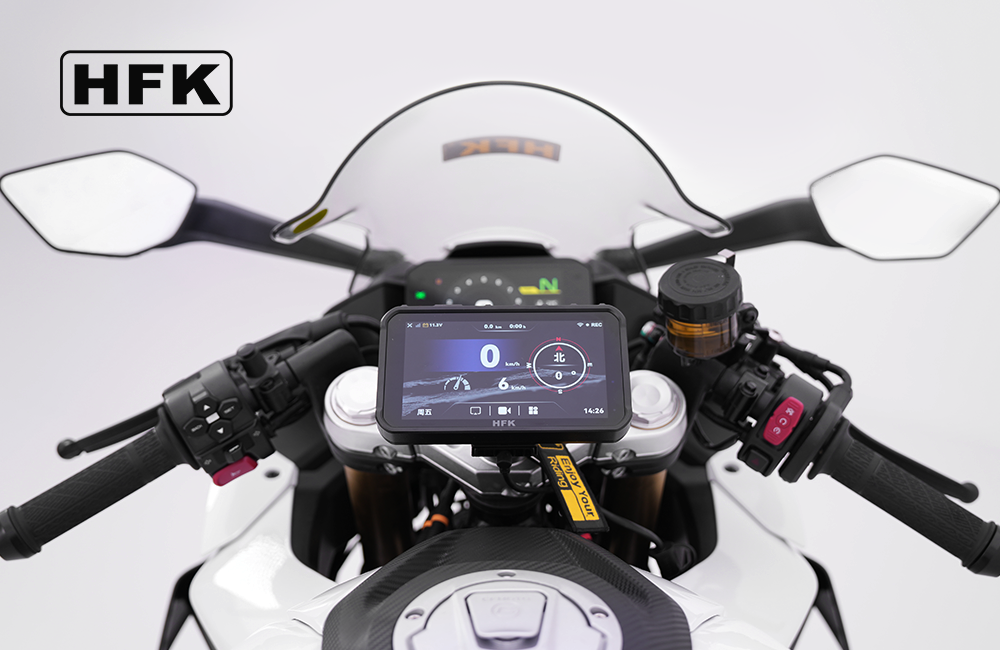

Adventure riding is not just transportation.
It is distance, uncertainty, and self-reliance.
Whether you are crossing mountain passes, riding through remote highways, or exploring gravel backroads far from cities, ADV and long-distance touring demand more preparation than daily commuting.
When you are hundreds of kilometers from home, one question becomes critical:
If something happens, how do you protect yourself?
For adventure riders, installing a motorcycle dash cam is not about convenience.
It is about risk management.
1. ADV Riding Means Unpredictable Conditions
Unlike controlled urban traffic, long-distance touring introduces:
-
Remote roads with limited witnesses
-
Changing weather within hours
-
Loose gravel and debris
-
Wildlife crossings
-
Construction zones in unfamiliar regions
If an incident occurs in a remote area, there may be:
-
No surveillance cameras
-
No nearby witnesses
-
No clear reconstruction of events
A motorcycle dash cam becomes your independent record of reality.
It documents:
-
Road conditions
-
Your riding line
-
Weather visibility
-
Actions of other vehicles
In isolated environments, evidence is protection.
2. Long-Distance Touring Increases Exposure Time
The longer you ride, the higher the exposure to risk.
An ADV rider may spend:
-
6–10 hours per day on the road
-
Thousands of kilometers per trip
-
Multiple climate zones in a single journey
Extended exposure increases the probability of:
-
Close overtakes
-
Driver fatigue errors
-
Sudden road hazards
-
Rear-end incidents during rest stops
A front-and-rear dash cam system continuously records these long hours — automatically and without distraction.
You ride.
It records.
3. Rear Protection: The Often Ignored Risk
Touring motorcycles carry luggage systems, panniers, and top boxes. They are heavier and slower to accelerate than sport bikes.
Rear-end collisions are a significant risk, especially:
-
At fuel stations
-
In traffic congestion
-
During sudden stops
-
On downhill mountain roads
A rear camera captures:
-
Following distance
-
Tailgating behavior
-
Speed of approaching vehicles
In many disputes, rear footage is decisive.
4. Weather Exposure and Equipment Reliability
Adventure riding means facing:
-
Heavy rain
-
Mud and water crossings
-
Dust storms
-
Cold mountain air
-
Intense summer heat
Standard consumer cameras or action cams are not built for continuous exposure to vibration, water spray, and long-duration operation.
Motorcycle-specific dash cams designed for touring typically feature:
-
High waterproof ratings
-
Sealed connectors
-
Vibration-resistant internal mounting
-
Stable power integration with the motorcycle
For long-distance riders, reliability matters more than temporary performance.
Equipment failure in the middle of a remote trip is more than inconvenient — it can compromise documentation when it is needed most.
5. Legal and Insurance Protection Across Regions
Long-distance touring often crosses:
-
Different cities
-
Provinces or states
-
Sometimes even national borders
Traffic laws, road standards, and driver behavior vary widely.
In the event of a dispute far from home, clear recorded footage:
-
Speeds up insurance claims
-
Prevents language-based misunderstandings
-
Reduces false accusations
-
Protects against fraudulent claims
For riders traveling internationally, video evidence provides objective clarity beyond verbal explanation.
6. Capturing the Journey
Adventure riding is not only about risk — it is about experience.
Mountain passes at sunrise.
Remote desert highways.
Twisting forest roads.
A dash cam silently records these moments in high resolution.
Unlike handheld action cameras, a dedicated dash cam:
-
Records continuously
-
Does not require manual start
-
Does not drain personal devices
-
Operates automatically with ignition
It becomes both protection and memory preservation.
7. Mental Confidence on Remote Roads
There is a psychological advantage as well.
When riding remote terrain, confidence matters.
Knowing that your ride is being documented:
-
Reduces stress in heavy traffic
-
Increases calm during close encounters
-
Provides reassurance in unfamiliar territory
ADV riding already requires focus on terrain, navigation, and endurance.
A dash cam removes one layer of uncertainty.
8. Is It Necessary for ADV Riders?
Short urban rides might feel manageable without one.
But for riders who:
-
Travel long distances
-
Cross remote areas
-
Face unpredictable weather
-
Carry significant investment in gear and motorcycle
A dash cam becomes part of the travel system.
It is not an accessory.
It is silent insurance.
Conclusion
Adventure and long-distance riding represent freedom — but also exposure.
On remote highways and mountain roads, you are often alone.
A motorcycle dash cam does not change the road.
It does not prevent every accident.
But it protects your story if something happens.
For ADV and touring riders, preparation defines responsibility.
Navigation systems guide the route.
Protective gear shields the body.
A dash cam protects your rights.
When the journey is long and the road is uncertain, documentation is not excessive.
It is wise.
Share:
Why Must Motorcycle Navigation Use a Dedicated Motorcycle CarPlay System?
HFK to Showcase Cutting-Edge Motorcycle Technology at MOTO SPRING 2026 in Russia