
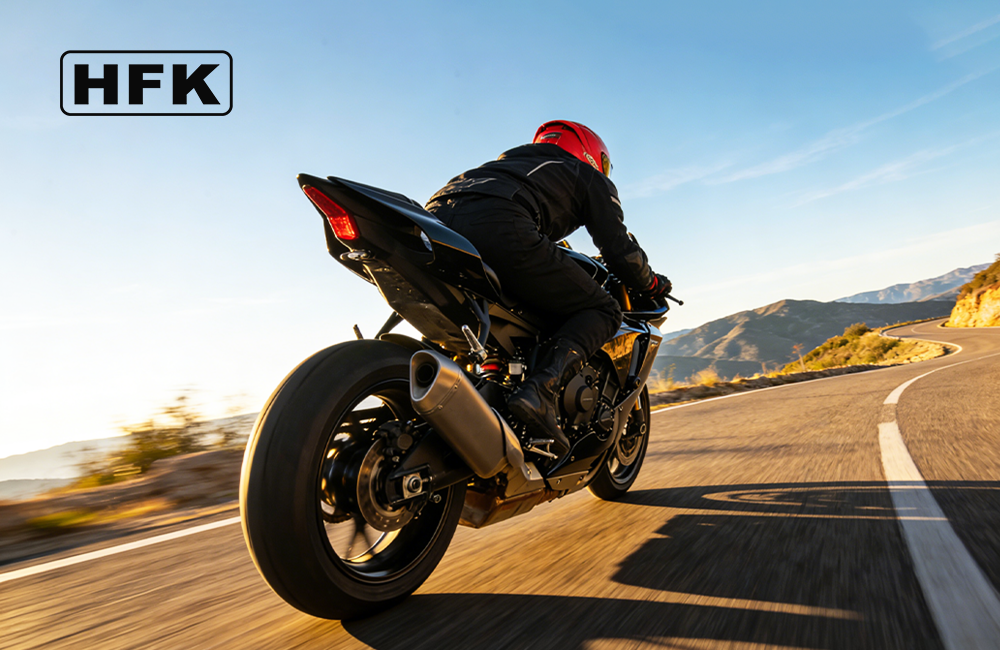

When riders think about motorcycle dashcams, the first thing that comes to mind is usually video footage of the road. But what can a motorcycle dashcam actually record? Can it capture license plates, traffic incidents, and what happens behind your bike? Does it keep recording when storage is full? And can it help you understand what happened after an accident?
These are important questions to ask before buying a motorcycle dashcam.
Unlike a camera used only to capture scenic rides, a motorcycle dashcam is designed to record everyday journeys and preserve useful footage when unexpected situations occur. Depending on the model, it may record the road ahead, traffic behind you, surrounding vehicles, changing road conditions, and even GPS information.
Understanding what a dashcam can—and cannot—record will help you choose the right system for your riding style.
1. The Road Ahead: More Than Just Scenery
The primary job of a motorcycle dashcam is to record what happens in front of your motorcycle.
During everyday riding, the camera may capture:
-
Vehicles changing lanes or turning suddenly
-
Traffic lights, road signs, and intersections
-
Cars entering your lane or stopping unexpectedly
-
Road hazards, debris, and changing traffic conditions
-
Events that occur immediately before a collision
This footage can help riders review a dangerous situation and may provide useful evidence if an accident occurs.
However, the quality of the recording depends on several factors, including camera resolution, viewing angle, lighting, lens quality, and mounting position. A camera may record a vehicle without capturing enough detail to identify its license plate, especially at night, in poor weather, or when the vehicle is far away.
That is why buyers should look beyond resolution alone. A well-designed camera system needs to produce clear, usable footage under real riding conditions.
For daily commuters and highway riders, this can be one of the most valuable functions of a motorcycle dashcam.
2. What Happens Behind You? The Value of Dual Cameras
A front camera cannot record everything happening behind your motorcycle.
Rear-end collisions, unsafe overtaking, tailgating, and vehicles approaching from behind can all be important parts of an incident. Without rear footage, a recording may show only part of the situation.
A dual-camera motorcycle dashcam uses front and rear cameras to provide a more complete view of the ride.
This is particularly useful for:
-
Commuting through busy city traffic
-
Riding on highways with frequent overtaking
-
Long-distance touring
-
Documenting incidents involving vehicles approaching from behind
When comparing dual-camera systems, check whether both cameras record simultaneously and what resolution each camera supports. Some products advertise high resolution for the front camera but use a lower-resolution rear camera.
HFK's HC50 combines front and rear 2K cameras with a smart motorcycle display, giving riders a convenient way to access navigation and recording in one setup.
For riders who want a removable display, the HFK HC50-RM also supports optional front and rear cameras. The cameras are sold separately, so riders should select the compatible accessories if they want recording functionality.
Remember that even a dual-camera system cannot capture every angle. Camera placement, luggage, bodywork, and other accessories may block part of the view.
3. Can a Motorcycle Dashcam Record License Plates?
This is one of the most common questions riders ask.
A motorcycle dashcam may capture license plates, but it cannot guarantee that every plate will be readable. The result depends on the recording resolution, camera sensor, viewing angle, distance, lighting, vehicle speed, and weather.
For example, a plate on a vehicle directly ahead in daylight may be clear, while a plate on a fast-moving vehicle at night may appear blurred or overexposed.
If license plate detail is important to you, look for a system with good image quality and stable footage. A wider viewing angle can capture more of the surroundings, but it may also make distant objects appear smaller in the image.
Night recording deserves special attention. Headlights, reflections, rain, and low street lighting can make plate details harder to capture.
When possible, review real sample videos recorded in daylight, at night, and in motion. These examples provide a more realistic picture of performance than a resolution label alone.
A dashcam can provide valuable visual evidence, but riders should never assume that every recording will clearly identify every vehicle.
4. Does It Record Continuously?
A good motorcycle dashcam is designed to capture the journey without requiring the rider to start a new recording manually every few minutes.
Many dedicated motorcycle dashcams support continuous recording while powered. When the motorcycle starts and the system receives power, recording may begin automatically, depending on the model and settings.
This is important because unexpected incidents happen quickly. If a rider must remember to press a button before every trip, there is a risk that important footage will be missed.
Loop recording makes continuous use more convenient. When storage becomes full, the system automatically overwrites older recordings with new footage.
For example, if you commute every day, loop recording means you do not need to manually clear storage after every ride.
Some systems also include collision detection or a gravity sensor that protects selected video files after an impact. However, how these files are locked and stored varies by product. Riders should check whether protected recordings can eventually be overwritten and how to back up important footage.
Continuous recording is one of the key differences between a motorcycle dashcam and a camera mainly intended for occasional filming.
5. What About Night Riding and Bad Weather?
Motorcycle journeys do not always happen in perfect conditions.
Riders may travel before sunrise, return home after dark, ride through tunnels, or encounter sudden rain. A dashcam should therefore be judged by how well it records in different environments—not just under bright daylight.
Important features include:
Low-light recording: A capable sensor and effective image processing can help preserve detail in darker conditions.
Wide-angle coverage: A suitable viewing angle helps capture more of the road, although an extremely wide image can make distant objects appear smaller.
Waterproof protection: Motorcycle cameras are exposed to rain and road spray. Check the protection rating of the camera and other exposed components.
Vibration resistance: Stable mounting and durable construction help keep footage usable on uneven roads.
For example, an IP69K-rated device is designed to meet demanding dust and high-pressure, high-temperature water-jet protection requirements under specified test conditions. Actual protection still depends on the complete system, connectors, installation, and the manufacturer's instructions.
HFK's HC50 is designed for motorcycle use and features an IP69K rating. This makes weather protection an important part of its design, alongside front and rear 2K recording.
For riders who regularly travel in changing weather, motorcycle-specific construction can be just as important as video quality.
6. Can a Dashcam Record GPS Data or Vehicle Information?
Some motorcycle recording systems support GPS, which may record location information and, depending on the product, speed or route data alongside video.
GPS data can help riders understand where a recording was made and review the route leading up to an incident. However, the exact information available depends on the hardware and software.
A smart motorcycle display may offer additional functions beyond recording. Compatible systems can provide navigation, smartphone connectivity, music, and calls through supported applications.
Some advanced setups also support vehicle information, but compatibility varies by motorcycle, installation, and device configuration. Do not assume that every dashcam or smart display can read every motorcycle's data.
This is where a smart motorcycle display differs from a dedicated dashcam: the dashcam focuses on recording, while the display can bring navigation and other riding functions into the same cockpit.
The HFK HC50 combines a smart display with front and rear cameras, making it suitable for riders who want both navigation and recording. The HC50-RM adds a quick-release design, giving riders more flexibility when removing or switching the display between compatible setups.
7. Motorcycle Dashcam vs. Action Camera vs. Smart Display
Although these devices can all capture video on a motorcycle, they are designed for different purposes.
| Feature | Motorcycle Dashcam | Action Camera | Smart Display with Camera Support |
|---|---|---|---|
| Main purpose | Continuous road recording | Recording rides and creating videos | Navigation, connectivity, and recording |
| Automatic recording | Common on dedicated systems | Depends on model and setup | Depends on the camera system |
| Loop recording | Common | Available on selected models | Available on compatible models |
| Front and rear coverage | Available on dual-camera systems | Often requires additional equipment | Available on compatible systems |
| Navigation | Usually not included | Usually not included | Supported on compatible models |
| Smartphone connectivity | Limited on many models | Varies by model | Common on smart displays |
| Best for | Everyday recording and evidence | Scenic footage and social content | Riders wanting multiple functions in one system |
An action camera is ideal for capturing memorable journeys, but battery management and manual recording may make some models less convenient for continuous daily use.
A dedicated dashcam is designed to record the road as part of your regular ride. A smart display with camera support adds navigation and smartphone functions, helping reduce the number of devices mounted on the handlebar.
Before purchasing an integrated system, always check whether cameras are included or sold separately.
8. How Much Does a Motorcycle Dashcam Cost?
The price of a motorcycle dashcam depends on the camera configuration, resolution, storage, weather protection, and additional features.
The following ranges are approximate market guides rather than fixed prices. Actual prices vary by brand, retailer, region, and package.
| Product category | Approximate price range | Typical features |
|---|---|---|
| Basic motorcycle camera | $50–$150 | Basic video recording |
| Dedicated dual-camera dashcam | $100–$300 | Front and rear recording, loop recording on many models |
| Premium motorcycle dashcam | $300–$450+ | Advanced imaging or additional features on selected models |
| Smart motorcycle display with camera support | $200–$600+ | Navigation, smartphone connectivity, and recording on compatible systems |
Budget models can be suitable for riders who simply want to record the road. Mid-range systems may offer a good balance of camera coverage, image quality, and cost. More advanced systems can add better imaging, GPS, larger storage, or smart display functions.
HFK offers different options for different riding needs. The HC50 combines a smart display with front and rear 2K cameras, while the HC50-RM offers a quick-release display with optional camera accessories.
When comparing prices, check the complete package. A lower-priced display may not include cameras, and additional storage, brackets, or installation costs may affect the final budget.
The best value is the system that provides the recording features you actually need—not simply the one with the lowest advertised price.
9. What a Motorcycle Dashcam Cannot Record
It is just as important to understand the limitations of a dashcam.
A camera records what is visible from its position. It cannot show events hidden behind vehicles or outside its viewing angle. It may not capture clear license plates in poor lighting, and it cannot always determine what a driver was thinking or what happened outside the frame.
Most motorcycle dashcams also do not record audio from every person or event around the motorcycle. Audio capability varies by model, and local laws may restrict recording conversations.
Similarly, recorded footage does not automatically prove who was at fault. It is evidence that may help clarify an incident, but the final interpretation depends on the footage, other available evidence, and applicable rules.
A dashcam should be treated as a tool for documenting the ride—not as a substitute for defensive riding, protective gear, or safe road behavior.
Final Thoughts: More Than Just a Video Recorder
So, what do motorcycle dashcams actually record?
Depending on the model, they can capture the road ahead, traffic behind you, road hazards, vehicle movements, and footage that may help explain an unexpected incident. Some systems also support GPS information, collision-triggered file protection, and smart display functions.
For everyday riders, the most useful features are often straightforward: clear video, front and rear coverage, continuous recording, loop recording, reliable storage, and motorcycle-specific weather and vibration protection.
If your main goal is to document the road, a dedicated motorcycle dashcam may be enough. If you also want navigation and smartphone connectivity, a smart motorcycle display with camera support can provide a more complete riding setup.
HFK's HC50 offers an integrated smart display and dual 2K cameras, while the HC50-RM provides a quick-release display with cameras available separately. Both approaches can suit riders who want to combine smart riding functions with road recording.
Ultimately, a motorcycle dashcam cannot record everything or prevent every accident. But when it is correctly installed and configured, it can preserve details that might otherwise be lost—and those details may make a real difference when you need to explain what happened on the road.
分享:
Can Motorcycle Dashcams Really Improve Rider Safety?