
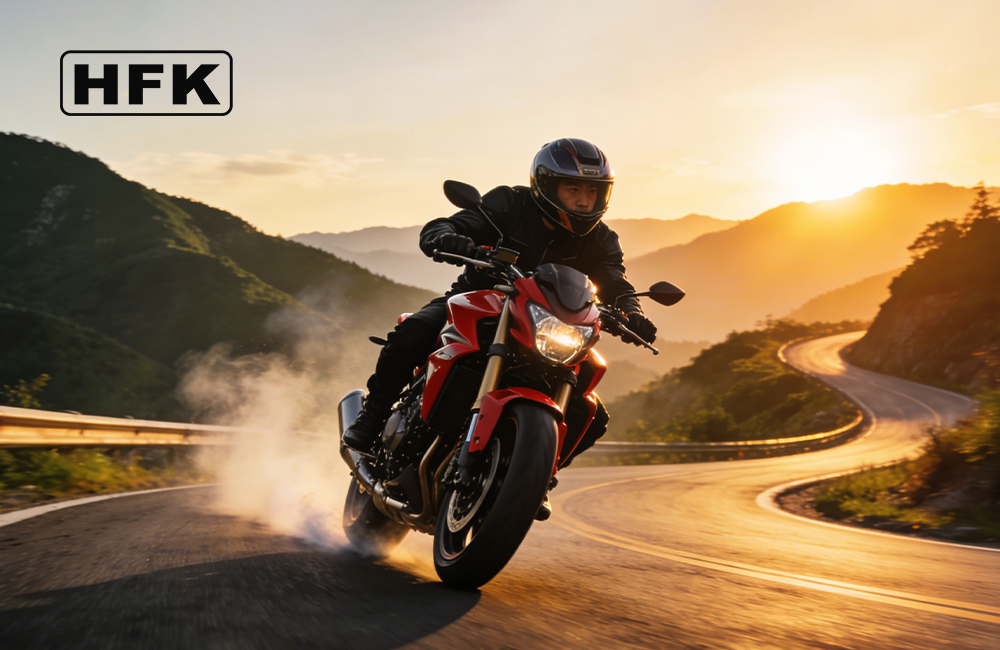

For motorcycle riders, every journey brings a mix of freedom, excitement, and uncertainty. A sudden lane change, an unexpected stop, or a vehicle cutting into your path can turn an ordinary ride into a stressful situation. A reliable motorcycle dashcam helps record these moments, preserve important evidence, and give riders greater confidence on the road.
But with so many options available, how do you know which features are worth paying for? Some cameras offer basic recording at an affordable price, while premium systems add dual-camera coverage, advanced night vision, GPS, and smartphone connectivity. Smart motorcycle displays take things further by combining navigation and entertainment with camera recording.
The best choice depends on how you ride. Here are the features that matter most when choosing a motorcycle dashcam.
1. Dual Cameras: Record the Road Ahead and Behind
Camera coverage should be one of your first considerations.
A front camera records traffic and road conditions ahead, but it cannot show everything happening behind your motorcycle. Rear-end collisions, unsafe overtaking, and tailgating are common reasons why rear footage can be valuable.
A dual-camera system records both directions, providing a more complete picture of your ride. This is particularly useful for daily commuters, highway riders, and touring enthusiasts who spend long hours in changing traffic conditions.
When comparing systems, check the resolution of both cameras, their viewing angles, and whether they can record simultaneously. A high-resolution front camera is useful, but the rear camera should not be overlooked.
For riders who want navigation and recording in one setup, the HFK HC50 combines a smart motorcycle display with front and rear 2K cameras. This gives riders access to smart riding functions while maintaining dual-camera recording.
2. Image Quality and Night Vision: Capture Details When They Matter
A dashcam is only useful if its footage captures enough detail to help explain what happened.
Common recording resolutions include 1080P, 2K, and 4K. Higher resolution can capture more detail, but it does not automatically guarantee better footage. The camera sensor, lens quality, exposure control, and image processing also affect results.
Night recording is equally important. Riders may encounter poorly lit roads, tunnels, glare from headlights, or sudden changes between sunlight and shadow. A camera that performs well in daylight may struggle in these conditions.
Look for:
- Clear daytime footage with useful road detail
- Good low-light performance
- Wide-angle coverage
- Stable images during vibration
- Effective exposure control in bright and dark areas
Some systems use Sony STARVIS sensors or other low-light imaging technologies to improve night performance. However, actual results depend on the complete camera system, so sample footage is more informative than a specification alone.
For many riders, a well-designed 2K dual-camera system offers a practical balance of image detail, storage use, and cost.
3. Waterproofing and Vibration Resistance: Choose Motorcycle-Specific Equipment
Motorcycles expose electronics to conditions that ordinary indoor cameras and many car-mounted devices rarely face.
Rain, road spray, dust, mud, engine vibration, and temperature changes can all affect reliability. A device designed specifically for motorcycle use should be built to handle these challenges.
Waterproof protection: Check the IP rating and confirm which parts of the system it covers. An IP69K-rated device is designed to withstand demanding dust and high-pressure, high-temperature water-jet tests under specified conditions. The rating does not mean every installation can tolerate every cleaning method, so follow the manufacturer's instructions.
Vibration resistance: A secure mount and durable housing help reduce movement and protect connections during daily riding. This is especially important on rough roads and off-road trails.
Temperature tolerance: If you ride through hot summers or cold mornings, check the specified operating temperature range.
Reliable power: A hardwired system can support automatic recording when the motorcycle starts, without depending on a small rechargeable battery. Correct wiring and installation are essential.
HFK's HC50 features IP69K-rated protection, dual 2K cameras, and an enhanced aluminum-alloy body designed for motorcycle use. For riders who regularly face changing weather and demanding road conditions, these design details can matter just as much as resolution.
A motorcycle dashcam should not merely produce good footage on a sunny day. It should be built for the environment in which it will be used.
4. Continuous Recording, Loop Recording, and Storage
One of the biggest advantages of a dedicated motorcycle dashcam is that it can record automatically throughout a ride.
Continuous recording helps capture events without requiring the rider to operate a camera while moving.
Loop recording automatically replaces older footage when storage becomes full, allowing recording to continue without frequent manual file management.
Some models also include a gravity sensor or collision detection function that protects selected recordings after an impact. Because file protection methods vary, check how the system handles locked files and whether they can eventually be overwritten.
Storage capacity matters, especially for long-distance touring. Higher-resolution front and rear footage can consume considerable space over several hours of riding.
Before purchasing, check whether storage is built in or supplied separately, the supported capacity, and how easily you can review or export video.
For example, the HFK HC50 offers built-in storage options and loop recording, helping riders keep everyday recording simple. Using the correct storage configuration and following the manufacturer's recommendations are important for reliable performance.
5. Dedicated Motorcycle Dashcam vs. Smart Motorcycle Display
Not every product advertised for motorcycle recording serves the same purpose.
A dedicated motorcycle dashcam focuses on capturing footage. A smart motorcycle display focuses on navigation and smartphone connectivity, with recording available on models that support compatible cameras.
| Feature | Dedicated Dashcam | Smart Display with Camera Support |
|---|---|---|
| Primary purpose | Recording road events | Navigation, connectivity, and recording |
| Front and rear cameras | Available on selected models | Available on compatible models |
| Continuous and loop recording | Common | Available on camera-equipped models |
| Apple CarPlay / Android Auto | Usually not included | Available on compatible models |
| Navigation screen | Usually not included | Yes |
| Music and calls | Usually not included | Supported through compatible smartphone integration |
| Installation | Cameras and recorder, depending on design | Display, mounting hardware, and compatible cameras |
| Typical cost | Usually lower | Often higher for feature-rich systems |
A dedicated dashcam is often the more economical choice if recording is your only priority. A smart display can be worth the extra cost if you also want navigation, music, and phone functions accessible from your handlebar.
However, camera support should never be assumed. Some smart displays do not include cameras, while others require them to be purchased separately.
HFK HC50 vs. HC50-RM
The HFK HC50 is designed for riders who want a smart display with front and rear 2K cameras in an integrated setup. Its features include built-in storage, loop recording, and IP69K-rated protection.
The HFK HC50-RM takes a different approach. It features a 5.7-inch Sharp display with 1400-nit brightness and a quick-release design, making it convenient for riders who want to remove the display or switch it between compatible motorcycles. Its front and rear cameras are optional accessories and must be purchased separately.
The right option depends on your priorities: an integrated camera package or a flexible quick-release display.
6. Price Comparison: What Do You Get for Your Money?
Motorcycle dashcam prices vary according to camera quality, recording features, durability, storage, and connectivity. The following ranges are approximate market guides, not fixed prices.
| Product category | Approximate price range | Typical use |
|---|---|---|
| Entry-level motorcycle camera | $50–$150 | Basic recording on a budget |
| Dedicated dual-camera system | $100–$300 | Front and rear recording for everyday riding |
| Premium dedicated dashcam | $300–$450+ | Higher-end imaging or additional features on selected models |
| Smart motorcycle display with camera support | $200–$600+ | Navigation, smartphone connectivity, and recording |
Brand examples help illustrate the differences:
- VSYSTO: A budget-focused option with dual-camera models, suitable for riders who want essential recording features without spending too much.
- INNOVV: Offers dedicated motorcycle camera systems, including higher-priced models with features such as dual-channel recording and GPS on selected products.
- Vantrue: Offers motorcycle camera systems with options emphasizing high-resolution front recording and additional recording features.
- HFK: Offers both dedicated motorcycle dashcams and smart displays with camera support, targeting riders who want recording, durability, and, on selected models, integrated navigation.
For a current reference point, INNOVV lists the K7 at around $388, while the VSYSTO D6L has been listed at around $82. HFK's official HC50 listing shows a starting price of $699.99, with configuration and storage options affecting the final purchase price. These are listed prices observed in October 2026 and may change with promotions or regional availability. <Cite refs={["turn387627search0","turn387627search1","turn387627search3","turn387627search11"]}/>
The price gap reflects differences in design and functionality, not just image resolution. A budget camera may be sufficient for basic recording, while a premium integrated system may combine a display, camera functions, storage, and smartphone connectivity.
Before comparing prices, check exactly what comes in the box. Camera modules, mounting brackets, memory cards, and other accessories may be sold separately.
7. Why a Motorcycle-Specific Dashcam Is Worth It
Some riders consider using an action camera or adapting a regular car dashcam. While these devices can record video, they may not provide the same convenience for continuous motorcycle use.
Action cameras are excellent for capturing scenic rides and creating travel videos. However, depending on the model, riders may need to manage battery life, start recording manually, and handle storage themselves.
A purpose-built motorcycle dashcam is designed around routine riding. It can support automatic recording, loop recording, weather-resistant camera installation, and a power setup suited to the motorcycle.
Most importantly, recorded footage can help document what happened during an incident. It may support an insurance claim or help clarify conflicting accounts, although it cannot guarantee a particular claim outcome or replace safe riding practices.
For commuters, touring riders, and anyone who regularly rides in busy traffic, that additional record can be valuable.
Final Thoughts: Choose Reliability Before Extra Features
The most important motorcycle dashcam features are not necessarily the ones with the biggest marketing claims. What matters is whether the system records clearly, operates reliably, and suits the conditions in which you ride.
Before making a purchase, prioritize:
- Front and rear camera coverage
- Clear daytime and nighttime recording
- Motorcycle-specific waterproofing and vibration resistance
- Automatic and loop recording
- Reliable power and sufficient storage
- A price and feature set that match your needs
If your priority is road recording, a dedicated motorcycle dashcam may be the right choice. If you also want navigation, calls, and music, a smart motorcycle display with camera support may offer a more complete solution.
For riders who spend a lot of time on the road, a motorcycle dashcam is more than another electronic accessory. It is a practical way to preserve the journey and capture important details when the unexpected happens.
Choose a system built for motorcycle conditions, install it correctly, and let it record quietly in the background—so you can focus on the road ahead.
Share:
5 Things to Know Before Buying a Motorcycle Dashcam